Discussions Focus on AI, Open Banking, MyData, Enterprise Network Analytics and the Future of Global Credit Information Services
May 21, 2026 | Bologna, Italy

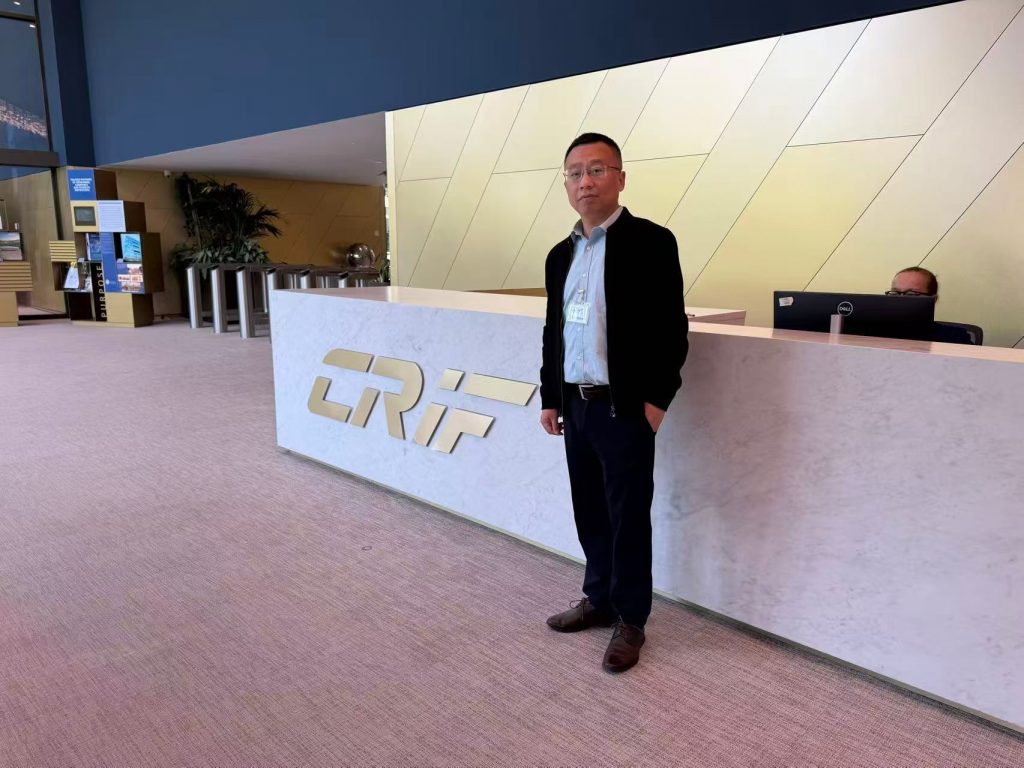
On May 21, 2026, Dr. Xinhai Liu, Chief Credit Expert of the China Mergers & Acquisitions Association (CMAA), together with colleagues, visited the global headquarters of CRIF in Bologna, Italy. The delegation met with Fabio Lazzarini, Senior Director of Alliances and Regulatory Affairs at CRIF, as well as CRIF colleagues responsible for Business Information, Open Banking and credit scoring, including a specialist from India.
The discussion covered major developments in the global credit information industry, applications of artificial intelligence in credit reporting and business information, MyData and Open Banking, enterprise credit and complex-network analytics, and credit information services for Chinese companies expanding overseas.

From Bologna to a Global Credit Technology Group
Bologna is one of northern Italy’s best-known historic cities and an important European center of learning, commerce and innovation. The University of Bologna, traditionally founded in 1088, is widely regarded as the oldest university in the Western world. CRIF was also born in this city.
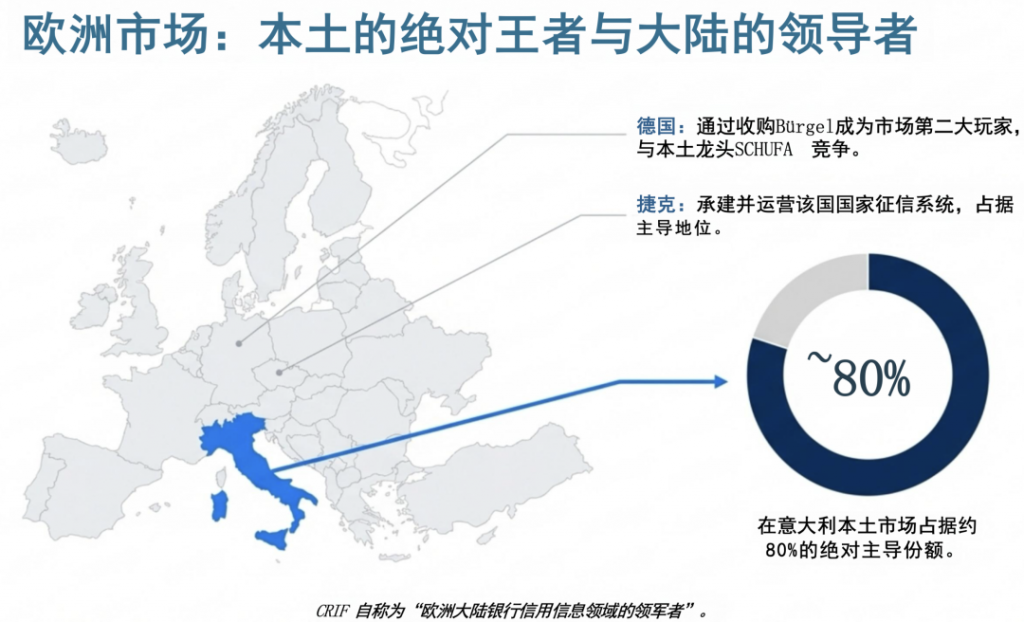
Founded in Bologna in 1988, CRIF began with credit information and banking-related credit services in Italy. Over nearly four decades, it has developed into one of the world’s important credit information and credit technology groups.
During the meeting, CRIF presented its global development and current business structure. The group’s annual business scale is now close to EUR 900 million, with direct operations in 37 countries and more than 80 subsidiaries worldwide. CRIF has also participated in the development of credit information systems and related infrastructure in a number of markets.
Rather than positioning itself simply as a traditional credit bureau, CRIF has gradually expanded its capabilities into four connected pillars: Information, Intelligence, Platforms and Outsourcing. Together, these capabilities form an end-to-end knowledge and service system that connects data, analytics, credit decisioning, digital processes and professional operations.
This evolution illustrates a broader industry trend: leading credit information institutions are moving beyond the role of credit-report providers and becoming integrated credit-technology infrastructure providers that connect data, intelligence, decision-making and business processes.
Credit Reporting Is Moving from Monthly Snapshots to Real-Time Data
One of the most important trends discussed during the visit was the changing nature of credit data itself.
Traditional credit reporting systems often rely on periodic batch submissions from financial institutions, sometimes updated monthly or even less frequently. A credit report therefore represents, to some extent, a historical snapshot. With the development of APIs, Open Banking and digital financial infrastructure, however, more data can now be accessed and processed in near real time.
This change is particularly important in emerging markets such as Southeast Asia. Where consumers and small businesses have limited traditional banking histories, e-commerce, payment, telecom and other forms of alternative data are increasingly being used as complementary inputs for credit assessment.
In high-frequency, small-ticket credit scenarios such as Buy Now, Pay Later (BNPL), digital consumer finance and embedded lending, monthly credit data alone may no longer be sufficient for real-time risk decisions.
The competitive advantage of future credit bureaus may therefore depend not only on who owns the largest historical database, but also on who can connect data more quickly, interpret it more intelligently and transform it into risk insights and business decisions in real time.
AI Is Entering the Core of Credit and Business Information Services
Artificial intelligence was another major focus of the discussion.
CRIF shared examples of how AI is being used in internal productivity, data analysis, risk decisioning and business information services. Generative AI is also beginning to change how users interact with traditional business credit reports. Instead of reading a lengthy report page by page, users may increasingly be able to ask natural-language questions about a company and use AI to understand its operations, financial position, risk profile and business relationships.
This direction strongly overlaps with Dr. Liu’s team’s recent work on AI and credit technology. The participants discussed how AI could be applied not only to credit scoring, but also to enterprise risk identification, business information analysis, lending decisions, fraud detection, post-loan risk monitoring and intelligent interaction with credit reports.
The development of AI may therefore reshape not only the technology used by credit information providers, but also their product formats, customer experience and long-term business models.
From Individual Company Credit to Enterprise Network Credit
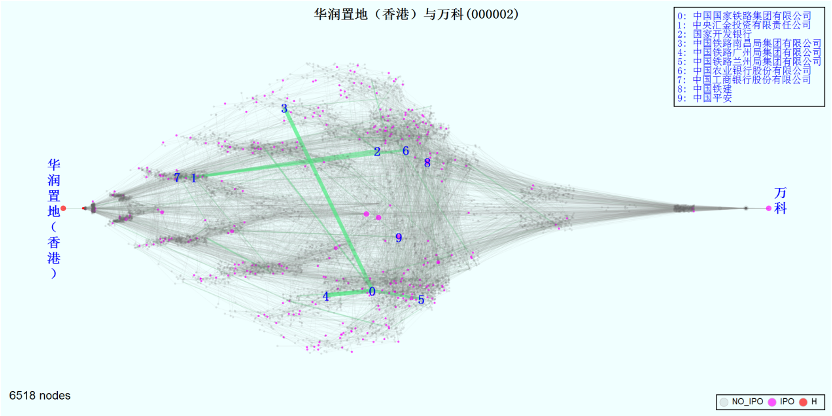
Dr. Liu also introduced his team’s research on complex-network analysis and enterprise credit risk.
Traditional business credit analysis often treats a company as an independent entity, focusing on registration records, financial performance, legal information, payment behavior and operating conditions. In reality, however, companies do not exist in isolation.
Ownership links, ultimate-control relationships, guarantees, supply chains, investments, shared executives and other connections form complex enterprise networks. A company may appear financially sound on its own while still being exposed to hidden risks through its broader network.
Adding a Connection dimension to traditional enterprise credit analysis can help identify group-level risk, hidden related-party exposure and potential risk contagion. This approach has clear relevance to CRIF’s long-standing activities in Business Information, supply-chain risk and enterprise credit management, and created a strong basis for further technical exchange.
Cyber Risk and ESG Are Becoming New Credit Variables
CRIF also introduced several newer forms of enterprise risk assessment that extend beyond traditional credit information.
One example is cybersecurity risk assessment for companies and supply chains. Cyberattacks, data breaches and digital-system exposure increasingly affect business continuity, reputation and even debt-servicing capacity. Cyber risk is therefore moving from being an isolated IT-security issue to becoming part of broader enterprise and credit-risk analysis.
At the same time, as European green-finance and sustainability regulation becomes more demanding, CRIF has developed ESG-related data, assessment and service capabilities that connect environmental, social and governance factors with enterprise risk management.
These developments show how modern business information is moving beyond the traditional combination of corporate registration, financial and legal data. Cybersecurity, supply-chain resilience, ESG and enterprise-network relationships are all becoming increasingly relevant components of next-generation business information services.
MyData, Open Banking and Personal Credit Services
The two sides also exchanged views on the use of MyData and Open Banking in credit reporting and financial services.
Open Banking allows consumers, with appropriate authorization, to make bank-account and transaction data available for new services, providing more timely and granular information beyond traditional credit reports. MyData goes a step further by emphasizing the individual’s ability to control, authorize and use personal data.
Dr. Liu shared observations on developments in China and Korea related to MyData, personal-data use and consumer credit services, and also introduced recent Chinese discussions on personal credit repair, consumer credit education and the broader social credit system.
CRIF showed considerable interest in these topics, and the participants also discussed China’s loan-facilitation market, consumer credit services and consumer-protection issues.
A Light-Hearted Moment: A Chinese Book Finds an Enthusiastic New Reader
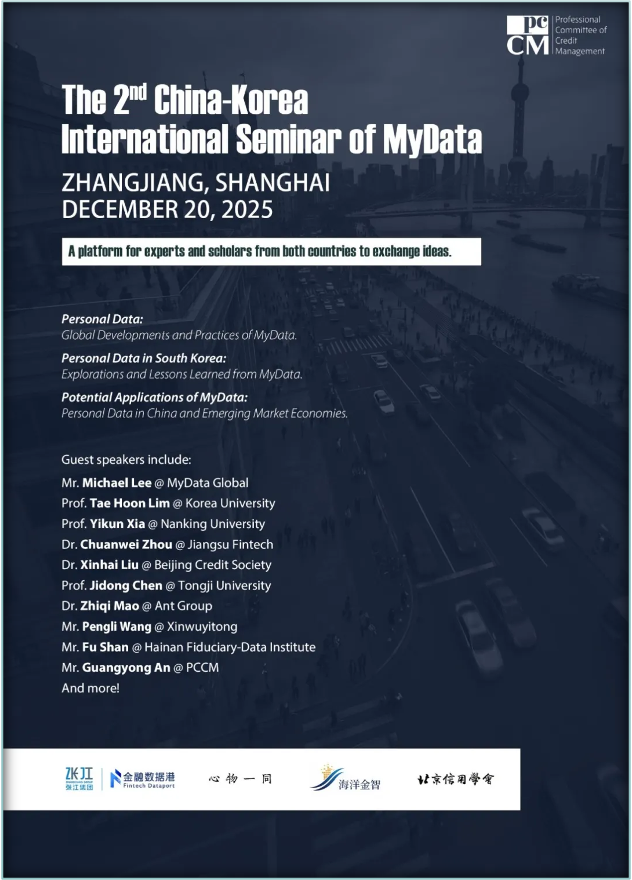
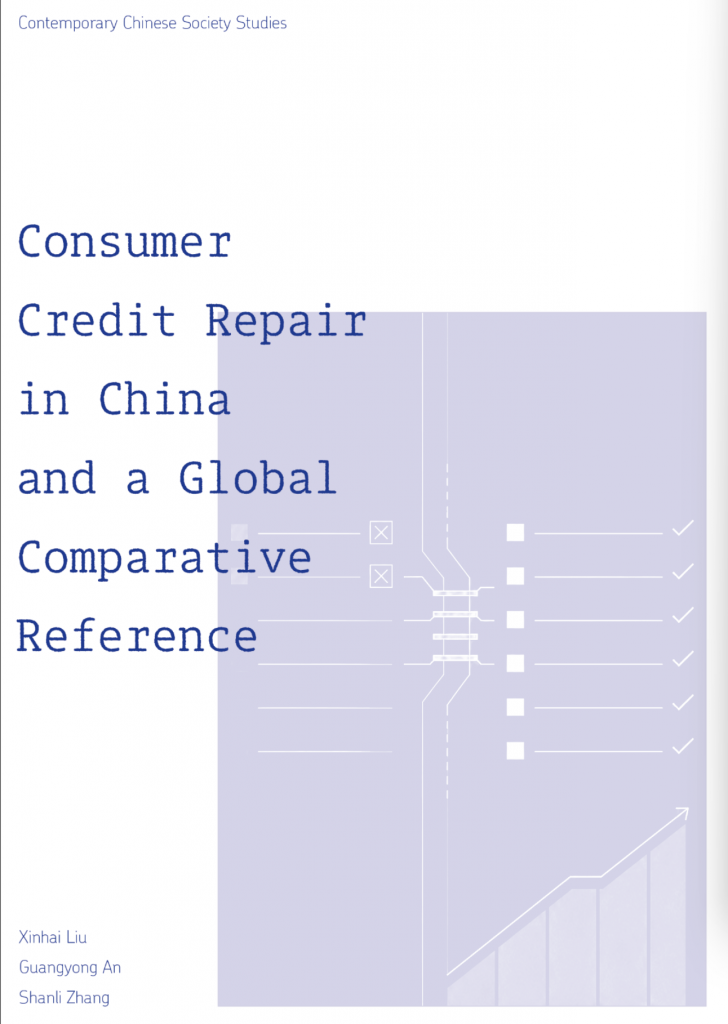
The meeting also included a memorable light-hearted moment. Dr. Liu presented CRIF with his new book, Repair Your Personal Credit: International Practice and Application. A CRIF colleague from India working on credit scoring showed immediate enthusiasm and quickly claimed the Chinese-language copy for further reading.
The book is written in Chinese, but in the era of large language models, language is becoming far less of a barrier to professional knowledge exchange.
The publication compares personal credit repair, debt relief and credit rehabilitation practices in markets including the United States, Korea and China. As China places greater emphasis on mechanisms for personal credit repair and credit rebuilding, the topic is also becoming increasingly relevant to international dialogue within the credit reporting industry.
Chinese Companies Going Global Are Creating New Demand for International Credit Services
Another important topic was the rapidly growing demand for business information and credit services created by the international expansion of Chinese companies.
As more Chinese companies enter Southeast Asia, the Middle East, Europe, Africa and Latin America, they need to know not only who their customers, suppliers and partners are, but also their credit quality, payment capacity, ownership relationships, compliance risks and long-term business viability.
This is precisely where international business information and enterprise credit providers can create significant value.
For Chinese companies going global, high-quality international business information is no longer merely a risk-control tool. It is increasingly becoming part of the infrastructure required for international trade, supply-chain management and overseas investment.
From a longer-term perspective, the Belt and Road Initiative requires not only logistics, payments and financing infrastructure, but also stronger cross-border credit infrastructure. CRIF’s accumulated experience in credit systems, business information and risk analytics across Europe, Asia and emerging markets could therefore have meaningful relevance to China’s growing global business needs.
Maintaining an Open Attitude Toward China and Future Cooperation
CRIF’s direct business footprint in mainland China is currently relatively limited, but the discussions in Bologna demonstrated continued interest in the Chinese market, China’s credit information industry and the international needs of Chinese enterprises. The CRIF team also expressed an open and constructive attitude toward future cooperation.
This impression was reinforced at the subsequent BIIA industry conference in Manila, where Dr. Liu continued discussions with Simone Lovati, Managing Director of CRIF Asia, and Novi Rolastuti, a senior CRIF Asia executive in Business Information Services. The conversations explored Chinese companies going global, international business information, AI-driven credit technology and the possibility of strengthening CRIF’s engagement with the Chinese market.
In a global environment shaped by increasing economic uncertainty and geopolitical complexity, China’s credit industry needs both strong and reliable domestic credit infrastructure and continued exchange with professional credit information institutions in Europe, Asia and other global markets.
Credit itself is an infrastructure for building trust. Cooperation among credit information institutions across countries must likewise be built on long-term trust.
The Bologna visit therefore provided a promising starting point for further international cooperation in AI-driven credit technology, MyData and Open Banking, enterprise network analytics, services for Chinese companies going global, and the development of cross-border credit infrastructure for Belt and Road cooperation.
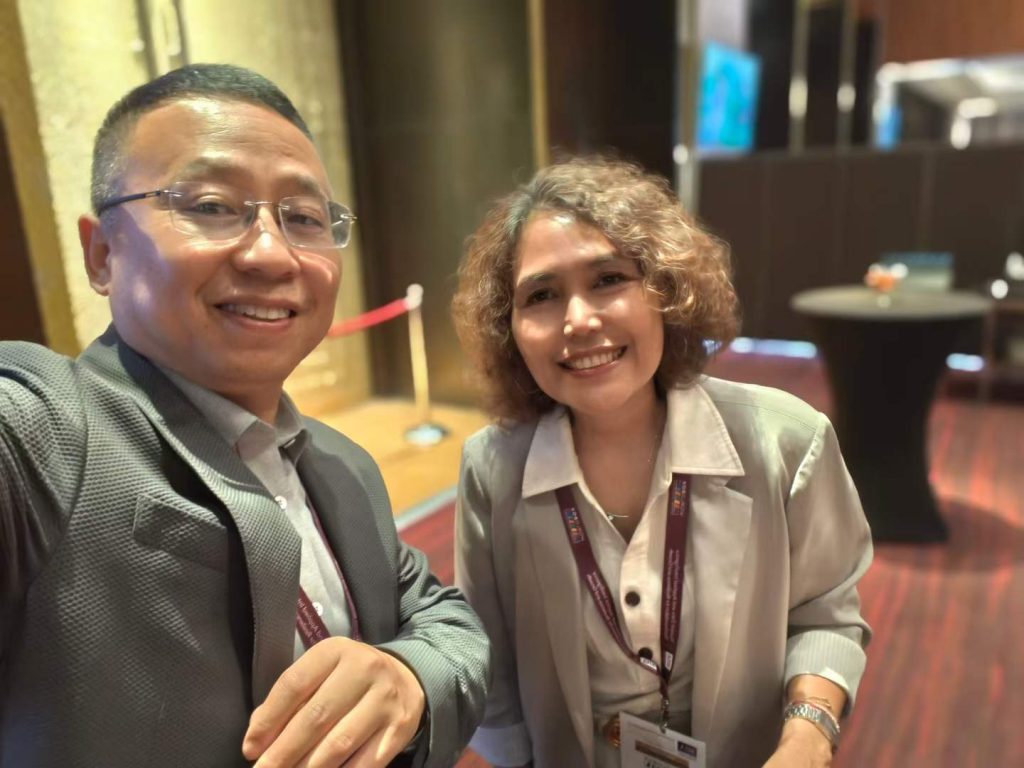
Together Picture with Ms. Novi Rolastuti in Manila, 2026-06
Some R reference in Chinese
CRIF的历史:30年前,几家银行坐在一起开了个会,后来诞生了欧洲最大的征信帝国
Sepcieal Issue of AI & Credit Times about CRIF