Monthly Archives: September 2026

Competing for Data, Not Services: What China’s First “Credit Reporting Lawsuit” Reveals About Data Circulation

Xinhai Liu 2026-09-09

Recently, as highlighted in a major report by Caixin—widely regarded as China’s most influential financial media—the country’s personal credit industry witnessed a landmark legal dispute. A leading big data service provider Bairong Inc.(6608.HKwww.brgroup.com) sued a state-licensed personal credit agency Baihang Credit (www.baihangcredit.com)and its foreign-backed partner WiseCotech (www.wisecotech.com)over the alleged misappropriation of commercial data products and trade secrets. WiseCotech, a prominent player with deep historical ties as the localized arm of U.S. credit-scoring giant FICO (Fair Isaac Corporation) in China, has added significant global and industry attention to this high-profile case.

While it is easy to view this merely as a corporate clash over profit-sharing, zooming out reveals a much more profound narrative. This lawsuit is not just a localized business dispute; it is a vivid cross-section of a market grappling with the friction between data abundance and strict regulatory frameworks.

Article content
News report from Caixin Midea

The Paradox: A Wealth of Data, A Bottleneck in Circulation

There is no doubt that China possesses one of the most robust and expansive underlying data ecosystems in the world. From the financial credit histories of over a billion consumers to the massive digital footprints left across mobile internet and tech platforms, the sheer volume of data is staggering.

However, in recent years, to ensure data security and protect consumer privacy, China has implemented highly stringent regulatory policies. In the credit sector, this means that the flow of personal financial data must pass through centralized, licensed gateways.

The result of this architecture is a paradox. On one hand, the baseline for data security and compliance has been successfully established. On the other hand, the compliant circulation and commercial application of data across different institutions have become exceptionally difficult. Massive amounts of high-value credit data remain siloed or “dormant,” unable to be efficiently utilized by the broader market.

Article content

The Reality: Competing for Access, Not Services

Because compliant data circulation is so heavily restricted, simply accessing underlying data has transformed into a scarce privilege. This has fundamentally shifted the nature of competition in the market.

In an ideal credit ecosystem, market participants—whether licensed agencies, big data firms, or fintech companies—should compete at the “product and service layer.” The focus should be on who can build the most accurate risk-pricing models, or who can provide the most efficient tools for the credit market.

Instead, what we are seeing is that institutions are exhausting their capital, technical resources, and management bandwidth on the “data layer.” The industry is caught in a zero-sum game of fighting for exclusive access to raw data, securing gateway privileges, or defending data perimeters. When the primary competitive advantage becomes “who controls the data” rather than “who provides the best analytical service,” the entire ecosystem suffers from structural inefficiency.

A Common Challenge for Emerging Markets

This tug-of-war between absolute data security and the need for market innovation is not unique to China. Many emerging markets that are currently building or upgrading their modern credit infrastructures are facing the exact same dilemma.

How do we balance stringent oversight with the need to activate the market? How do we prevent licensed infrastructural gateways from inadvertently becoming monopolies that stifle technological innovation? These questions highlight an urgent need for better top-level architectural design and institutional reform globally, ensuring that dormant data can flow compliantly and efficiently.

A Microcosm of a Broader Era

Ultimately, this “data turf war” in the credit sector is a microcosm of a much broader challenge facing China’s digital economy.

Across numerous industries—from healthcare and transportation to smart cities—we see the same structural phenomenon: data is incredibly abundant, yet cross-entity circulation and practical application remain a struggle. Solving this bottleneck and transitioning from a focus on “data hoarding” to “value-added data services” will be the true key to unlocking the potential of the data economy, not just in China, but in any highly regulated digital market.

Reference

The Caixin’s news report:https://mp.weixin.qq.com/s/TeAsbhlXOocVVPLeKyQdeQ?scene=1

#Fintech #DataGovernance #CreditReporting #EmergingMarkets #DataRegulation #RiskManagement #FICO #Bairong
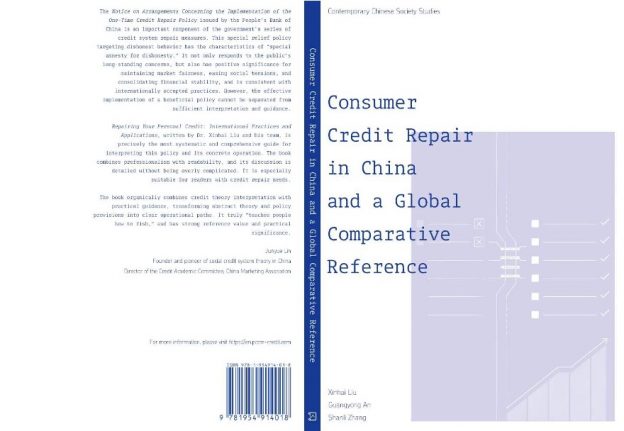
China’s First Book on Personal Credit Repair: A Global Perspective on Credit Rehabilitation

PCCM is pleased to introduce the English edition of Credit Repair in China and a Global Comparative Reference, a pioneering publication examining personal credit repair in China through an international comparative perspective.

View image

To our knowledge, this is the first book from China dedicated to the systematic study of personal credit repair and rehabilitation. While credit repair has long been a well-established topic in the United States—with an extensive market of books, advisory services, consumer organizations and specialized businesses—the subject remains relatively new in China.

The publication builds on years of research by our team into personal credit reporting, consumer protection, credit rehabilitation and the broader personal credit economy. It seeks not only to explain how credit repair works, but also to address a more fundamental question:

How can a modern credit system maintain appropriate credit discipline while giving consumers who have experienced financial difficulties a meaningful opportunity to rebuild their credit?

From Credit Reporting to Credit Rehabilitation

Credit reporting systems are essential infrastructure for modern financial markets. They help lenders assess risk, reduce information asymmetry and support responsible access to credit.

However, an effective credit system must address not only how financial difficulties are recorded, but also what happens afterward.

Consumers may experience repayment difficulties for many reasons, including economic downturns, unemployment, illness, family emergencies or systemic shocks such as the COVID-19 pandemic. Once their financial situation improves and their obligations are resolved, an important policy question arises: how should the credit system recognize recovery?

This is where credit repair and credit rehabilitation become an important part of the personal credit economy.

Our research has also found that this field contains both significant opportunities and serious risks. Alongside legitimate consumer services, financial education and technological innovation, credit repair markets can also give rise to misleading services, abusive practices and illegal “credit washing.” Developing a sound framework therefore requires a careful combination of consumer protection, financial regulation, credit reporting governance and market innovation.

Five Key Dimensions of the Book

The book is organized around five major areas:

1. The historical development of credit reporting and credit systems

The book begins by examining how modern credit reporting developed and why credit information became a fundamental component of consumer finance.

2. Why personal credit repair matters

It examines the economic and social consequences of impaired credit and explores why consumers need legitimate mechanisms to correct errors, resolve past problems and rebuild their financial lives.

3. International comparison

The book reviews credit repair and rehabilitation practices across different jurisdictions, providing a comparative perspective on how credit systems balance risk management, consumer protection and the principle of a second chance.

4. Key institutional mechanisms

It examines mechanisms including credit information disputes and correction, the treatment and retention of negative information, debt resolution and other institutional arrangements that can support credit rehabilitation.

5. Implications for China

Drawing on international experience, the book discusses the development of China’s personal credit rehabilitation framework and the broader evolution of its consumer credit system.

Overall, the publication combines international comparison with institutional analysis, making it relevant not only to researchers but also to financial institutions, credit reporting organizations, regulators, consumer protection professionals and the broader credit industry.

A Timely Publication as China Introduces a New Credit Rehabilitation Policy

The publication is particularly timely.

In response to the lingering economic effects of the COVID-19 pandemic, the People’s Bank of China (PBoC)decided to implement a one-time personal credit rehabilitation policy beginning in 2026.

Under the policy, personal overdue records arising between January 1, 2020 and December 31, 2025, with an individual amount not exceeding RMB 10,000, will no longer be displayed in China’s Financial Credit Information Basic Database if the individual fully repays the overdue debt by March 31, 2026.

The policy also provides consumers with additional opportunities to obtain their personal credit reports free of charge during the first half of 2026.

The initiative represents an important experiment in balancing credit discipline, consumer protection and economic recovery. Rather than simply forgiving debt, it links credit rehabilitation to repayment, providing a targeted pathway for consumers who have resolved relatively small overdue obligations to rebuild their credit standing.

The research behind this book was conducted over several years and contributed intellectual and comparative support to discussions surrounding the development of China’s credit rehabilitation framework.

The book also received a recommendation from a former Director-General of the Credit Information System Bureau of the People’s Bank of China, reflecting the policy relevance of this research.

Credit Repair as Part of the Personal Credit Economy

PCCM views personal credit repair not as an isolated consumer service, but as an important component of the broader personal credit economy.

Around credit reporting systems exists an expanding ecosystem involving credit monitoring, financial education, debt counseling, identity protection, credit-building products, consumer dispute services and personal financial management.

As China’s consumer credit market continues to develop, similar needs are emerging.

The challenge is therefore not simply whether credit repair should exist, but how legitimate credit rehabilitation services can be distinguished from misleading or illegal practices, and how a professional and responsible market can develop around consumers’ genuine needs.

The Next Frontier: AI-Powered Personal Credit Management

Artificial intelligence may significantly change this field.

In the future, AI systems could help consumers understand complex credit reports, identify possible errors or inconsistencies, explain factors affecting their credit standing, navigate legitimate dispute and rehabilitation procedures, and develop personalized strategies for improving their financial health.

For financial institutions and credit service providers, AI may also enable more scalable and personalized approaches to consumer education, credit monitoring and post-distress financial rehabilitation.

This creates opportunities extending beyond traditional “credit repair” toward a much broader field of AI-powered personal credit management and financial health services.

We believe this intersection of credit reporting, consumer protection, personal data and artificial intelligence will become an increasingly important area for research, policy development and commercial innovation.

From China to the Global Credit Community

Although the book focuses significantly on China’s experience, its underlying question is global.

Every mature consumer credit system ultimately faces the same challenge:

How should we distinguish between a consumer who remains a credit risk and one who experienced financial difficulty in the past but has since recovered?

Finding better answers to this question matters for consumers, lenders and the economy as a whole.

Through this publication, PCCM hopes to contribute China’s emerging experience to the international discussion while continuing to learn from credit reporting systems and credit rehabilitation practices around the world.

A good credit system should not only remember the past. It should also be capable of recognizing recovery.

View image

The new books is shared with Ms. Sally Vu,KCI from Vietnam

View image
A friend from Oman
View image
Dr. Piotr Wojewnik, BIK from Poland;

View image

Mr. Manisha Dissanayake, CRB from Sri Lanka;

View image
Mr. Anil Chandra Adhikari, CEO of CIB from Nepal;

eCredible Visits PCCM for Dialogue on Cross-Border Credit, Supplier Assessment and Technology Credit

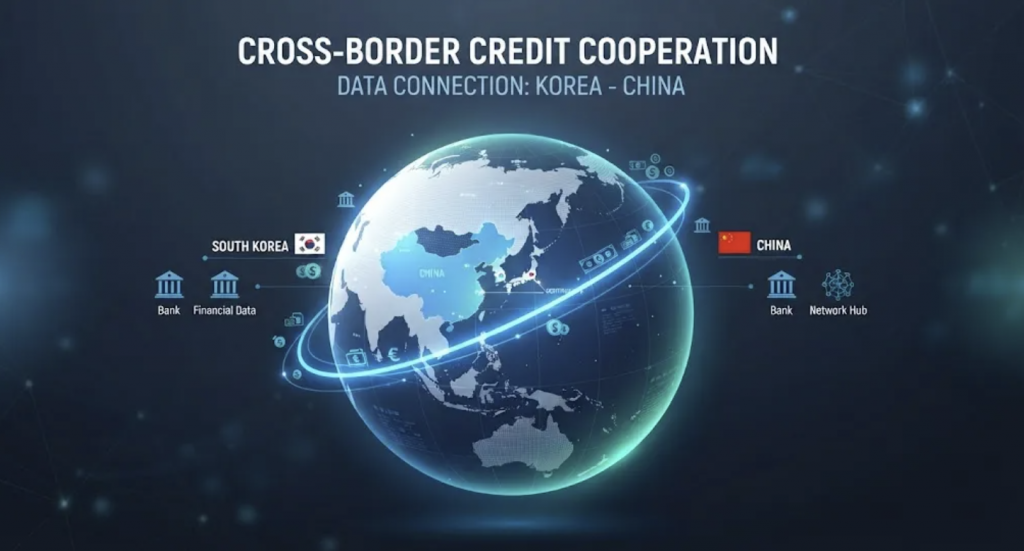
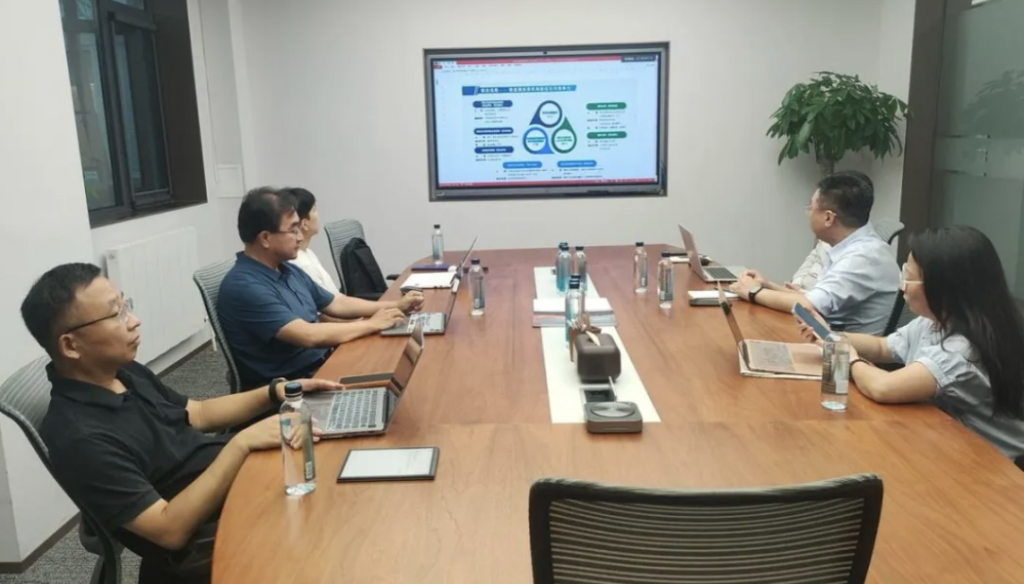
Beijing, August 31, 2026 — Representatives of eCredible, a leading Korean corporate credit and business assessment provider, visited the Professional Committee of Credit Management (PCCM) , China Mergers & Acquisitions Association (CMAA) in Beijing for a professional exchange on cross-border credit reporting, supplier credit assessment, technology credit assessment and future China–Korea cooperation.

The meeting was held at PCCM’s office at the Xiyuan Hotel in Beijing. Participants included Ian Rho, Head of Overseas Business at eCredible; Dr. Xinhai Liu, Chief Credit Expert of CMAA; Guangyong An, Researcher at PCCM; as well as Dawei Hao, Weijian Peng and Zhenzhen Li, professionals from a leading Chinese credit services institution(Lianhe Credit,the 2rd largest Credit Rating Group in China).

Exploring Korea’s Supplier Credit Assessment Experience

During the meeting, eCredible introduced its experience in corporate credit assessment, supplier risk management and technology credit assessment in Korea.

Founded in 2001, eCredible has developed extensive experience in serving large Korean corporations and their supply chains through corporate credit assessment, technology evaluation, ESG-related services and business information solutions.

Participants discussed Korea’s mature supplier credit assessment model and its relevance to Chinese companies participating in Korean and global supply chains.

As trade and industrial cooperation between China and Korea continues to evolve, an increasing number of Chinese manufacturers and technology companies are directly supplying components, equipment and services to major Korean corporations.

The participants noted that standardized and professional supplier credit assessment can help reduce information asymmetry in cross-border transactions and improve the transparency and credibility of suppliers operating across different markets.

Technology Credit Assessment and New Approaches to Evaluating Innovative Companies

Technology credit assessment was another major topic of discussion.

eCredible shared Korea’s experience with Technology Credit Bureau (TCB) services, which have become an important tool in supporting technology-based SMEs, innovation finance and technology evaluation.

The participants discussed how traditional credit assessment methodologies, which often rely heavily on financial statements and tangible assets, may not fully reflect the value and risks of emerging technology companies.

This is particularly relevant for companies in sectors such as:

  • artificial intelligence,
  • robotics,
  • semiconductors,
  • advanced manufacturing,
  • digital infrastructure,
  • and other technology-intensive industries.

Future credit assessment frameworks may therefore need to incorporate additional factors such as technological capability, R&D strength, commercialization potential, intellectual property, management teams, market prospects and business sustainability.

The meeting also explored the potential role of artificial intelligence in improving the efficiency and depth of technology and corporate credit assessment.

Building Stronger Cross-Border Credit Infrastructure

PCCM also introduced its long-standing work in cross-border credit research and international cooperation.

PCCM and its professional team have previously participated in a cross-border credit system research project supported by the World Bank and the Foreign Capital Department of China’s National Development and Reform Commission (NDRC).

The team has also developed the Oversea Private Enterprise Credit Service Platform, with a focus on supporting Chinese private enterprises engaged in international trade, investment and overseas expansion.

In parallel, PCCM has been developing a Global Credit Reporting Database, tracking credit bureaus, business information providers, credit assessment systems, regulatory frameworks and business models across different countries and regions.

Through international conferences, professional exchanges and joint research, PCCM has also established working relationships with credit reporting institutions, industry associations and experts across Asia, Europe, Latin America and other markets.

These resources are gradually forming an integrated foundation combining:

Cross-border credit research + international credit institution networks + global credit intelligence + expert resources + enterprise services.

Addressing the Cross-Border Credit Data Challenge

A further area of discussion concerned one of the most practical challenges in cross-border credit reporting:

How can Chinese corporate credit information be used safely, compliantly and effectively in overseas credit assessment and cross-border transactions?

PCCM has been conducting research on this issue for several years.

Rather than simply transferring raw corporate information across borders, future solutions may involve localized data collection and processing, standardized assessment, appropriate authorization mechanisms, necessary data minimization and collaboration between domestic and overseas professional institutions.

The participants agreed that developing practical and compliant approaches to cross-border credit information could become an important foundation for international supplier assessment and cross-border business services.

Preparing a Cross-Border Credit Research and Service Initiative

Building on its existing international projects, databases, expert resources and institutional partnerships, PCCM has begun preparations for a Cross-Border Credit Research and Service Initiative.

The Initiative will focus on areas including:

cross-border credit reporting, global corporate information, supplier credit assessment, technology credit assessment, corporate internationalization and international cooperation among credit institutions.

Its objective is to combine research, international networks, product development and practical services, and to help connect Chinese enterprises with professional credit systems and service providers around the world.

PCCM is also upgrading its long-running publication, Global AI & Credit Intelligence, into a new bilingual Chinese-English edition, with the aim of sharing research, market developments and professional insights with credit reporting, financial technology and credit risk professionals globally.

Looking Ahead

Participants agreed that China and Korea have significant opportunities for further professional cooperation in supply-chain credit management, technology assessment and cross-border credit services.

PCCM looks forward to continuing its dialogue with eCredible and other international credit institutions, while developing practical solutions that can support global trade, supply-chain cooperation and technology-driven credit innovation.