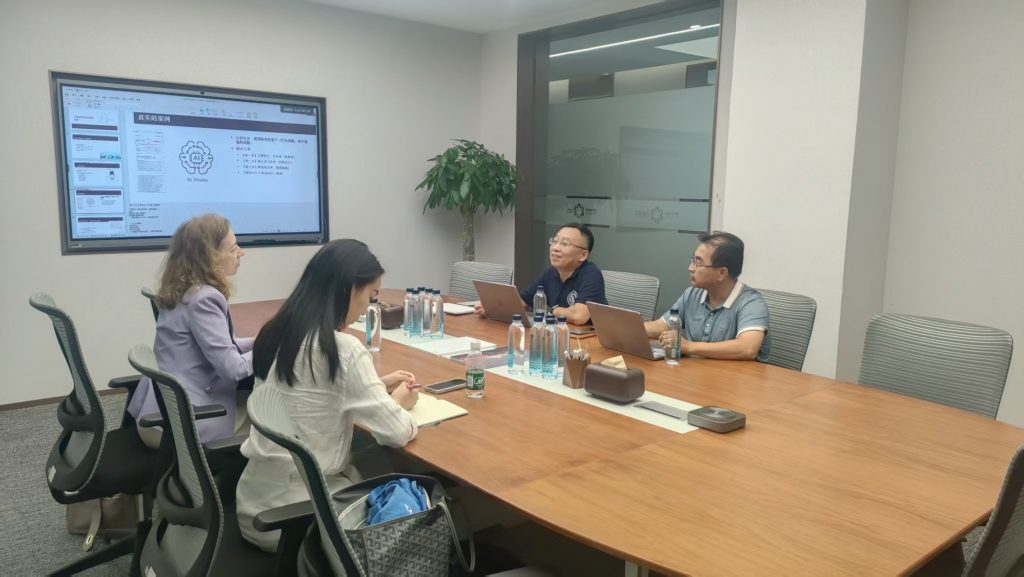
Beijing, August 24, 2026 — Margit Molnar, Head of the China Desk at the Economics Department of the Organisation for Economic Co-operation and Development (OECD), held an in-depth exchange with Dr. Xinhai Liu, Chief Credit Expert of the China Mergers and Acquisitions Association (CMAA), on the future of credit reporting, artificial intelligence, financial technology and data governance in an increasingly digital economy.
Dr. Xinhai Liu, is also the Vice President of the Beijing Credit Association, is among the earlier Chinese experts to have worked extensively and continuously in the fields of FinTech and credit technology. Over the years, he has focused on credit reporting and credit technology, personal data and MyData, artificial intelligence, and financial technology, building a substantial body of work in research, technology applications and international professional exchange.
Dr. Liu has maintained long-term cooperation and dialogue with professional institutions and experts across a number of countries and regions, and has developed a growing professional presence in the fields of credit technology and digital finance both in China and internationally.
The meeting was arranged through the introduction of the State Information Center as part of an international expert research and exchange initiative. Dr. Guangyong An, a Korea-based expert on data and credit systems, also participated in the discussion.
The dialogue covered a wide range of emerging issues, including AI-enabled credit assessment, alternative data and financial inclusion, MyData and personal data governance, SME finance, corporate network risk, intellectual property and data-based financing, as well as the changing role of national credit information infrastructure.
An Exchange Between Macroeconomic Research and FinTech Practice
Margit Molnar is a long-standing specialist on the Chinese economy. She has served as Head of the China Desk at the OECD Economics Department since 2014 and has been closely involved in OECD economic forecasts and the OECD Economic Surveys: China. Her research has covered economic growth, productivity, structural reform, corporate performance and financial development in China.
Dr. Xinhai Liu is a well-known Chinese expert in financial technology and credit technology. He has worked extensively in the fields of credit reporting and credit technology, personal data and MyData, artificial intelligence, and digital finance, with a substantial body of research, technology development and international professional engagement.
His work over the past two decades has followed the evolution of the credit industry from traditional credit reporting to big-data-driven risk management and, more recently, AI-powered credit intelligence. Through research publications and cooperation with professional institutions in Asia, Europe and other regions, he has also built a growing international presence in the credit and FinTech community.
Following the introduction by the State Information Center, the discussion brought together the OECD’s macroeconomic and structural policy perspective with China’s practical experience in credit technology and digital finance.
From Big Data to AI-Powered Credit Intelligence
One of the central topics was the evolution of China’s credit infrastructure over the past two decades.
As China’s traditional credit reporting system developed, financial institutions increasingly began to use alternative data— including payment, transaction, telecommunications and other non-traditional information — to assess borrowers with limited conventional credit histories.
These innovations have played an important role in improving financial inclusion and supporting lending to consumers and small businesses that might otherwise have remained outside conventional banking risk models.
The discussion then turned to the next stage of this transformation: artificial intelligence and large language models (LLMs).
Dr. Liu noted that one of the most important economic contributions of AI is its ability to dramatically reduce the cost of collecting, processing and interpreting information, particularly unstructured information.
This creates new opportunities in credit markets.
For example, corporate credit reports and financial due-diligence documents can contain dozens or even hundreds of indicators, legal records, ownership relationships and risk signals. AI can help extract, organize and interpret such information and translate highly technical credit reports into language that is easier for SMEs and consumers to understand.
AI agents may eventually develop into personal or corporate credit assistants, helping users understand their credit position, prepare financing applications and manage financial risks more effectively.
At the same time, the participants agreed that large language models should not simply replace conventional credit risk models or professional judgment. In high-stakes areas such as lending decisions, AI applications still require structured financial data, statistical models, professional rules, model validation and appropriate human oversight.
MyData and the Future of Personal Data Governance
Another major topic was the tension between data protection and data mobility.
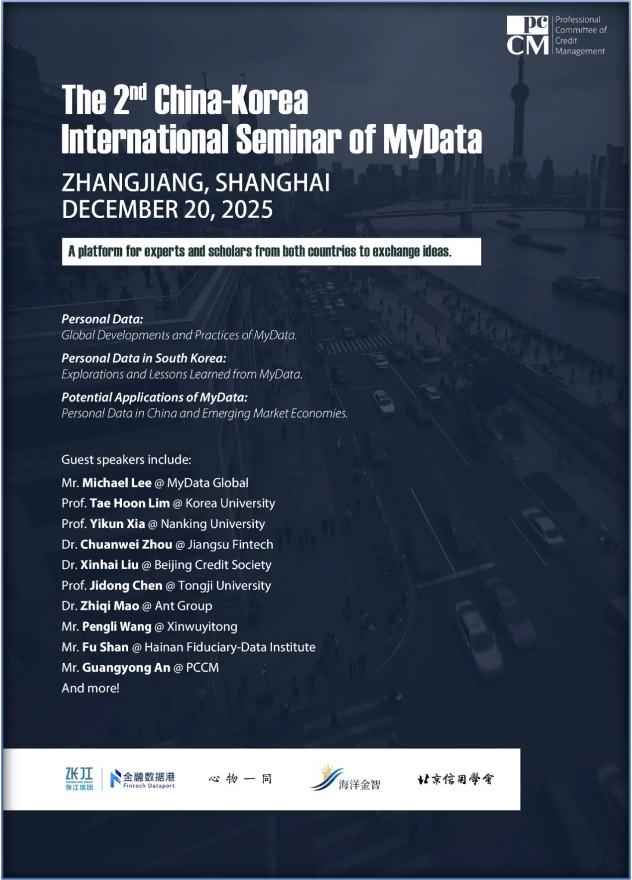
The discussion examined the international development of MyData, a human-centric approach to personal data governance that gives individuals greater control over how their data are accessed, transferred and used.
The concept is closely related to the principle of data portability, which allows individuals to authorize the transfer of their data between institutions rather than leaving such information permanently locked inside large platforms.
The participants compared different international approaches, particularly developments in Korea and Europe.
Korea has built one of the world’s most advanced financial MyData frameworks, enabling consumers to authorize the aggregation and use of financial data held by banks, credit card companies and other institutions.
China, however, has a different digital ecosystem. Large technology platforms play an important role in payments, commerce and other digital infrastructure, and data have considerable commercial value within these ecosystems.
As a result, developing a Chinese approach to MyData will require careful consideration of the interests of consumers, financial institutions, technology platforms, credit bureaus and public-sector data holders.
The discussion emphasized that the future of data governance should not be framed simply as a choice between privacy and innovation. The more important challenge is to design institutions and technologies that allow useful data to circulate while protecting individual rights, security and legitimate commercial interests.
From Individual Credit Scores to Corporate Network Risk
The participants also discussed how digital technology is changing the way corporate credit risk is understood.
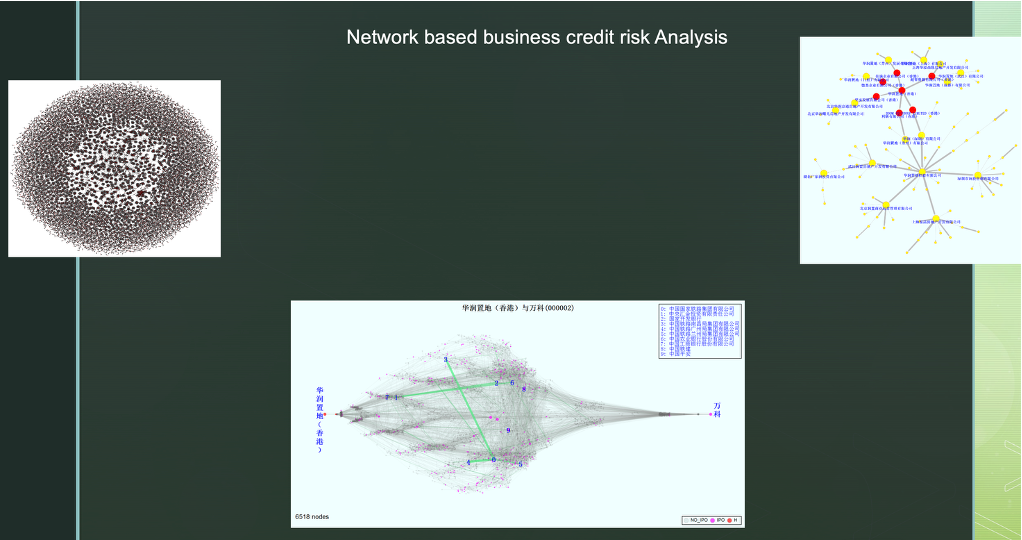
Traditional credit analysis often treats companies as individual entities. In reality, companies are connected through ownership, investment, guarantees, supply chains, payments and commercial relationships.
Financial distress can therefore spread through networks.
China’s previous experience with corporate guarantee chains demonstrated how problems at a relatively small number of firms could rapidly transmit across groups of interconnected enterprises.
Dr. Liu discussed earlier research and practical work involving corporate network analysis and systemic risk modeling. By combining corporate ownership, investment, guarantee, supply-chain and other relationship data, knowledge graphs and network models can help identify risk concentrations and potential channels of contagion that may not be visible from conventional company-level credit indicators.
AI may further strengthen this capability by extracting relationships from large volumes of structured and unstructured information.
However, significant challenges remain. High-frequency business information — including invoices, payments, orders and supply-chain transactions — is often distributed across banks, tax authorities, technology companies and other data holders.
Developing mechanisms for the compliant connection and use of such data could become an important component of next-generation financial infrastructure.
Credit Assessment for Technology Companies and Intangible Assets
The exchange also explored the growing financing needs of technology-intensive and asset-light companies.
Traditional bank lending has historically relied heavily on physical collateral such as property. Technology companies, however, may derive much of their value from intellectual property, technology, data, human capital and future growth potential.
The participants discussed international practices such as Korea’s Technology Credit Bureau (TCB) framework, which incorporates technology capability, intellectual property and innovation into broader corporate credit assessments.
Intellectual property is becoming increasingly relevant to technology finance, although the economic value of an intangible asset is not necessarily equivalent to its collateral value.
Data assets present even more complicated questions. Data can be replicated, may involve multiple rights holders, and frequently contain privacy or security considerations.
For this reason, it may currently be more practical to treat data, transaction flows, orders and digital operating capabilities as important indicators of business quality and future cash flow rather than simply applying the conventional logic of physical collateral to data itself.
The rapid development of AI infrastructure is also creating new financing questions around computing capacity and other digital resources. Their rapid technological depreciation and changing market prices require financial institutions to develop new approaches to valuation and risk management.
AI, Credit Infrastructure and Financial Stability
Beyond individual lending decisions, the discussion addressed how AI and better-connected credit information could contribute to financial stability.
A well-developed credit system can make household and corporate indebtedness more transparent. However, credit reporting alone cannot prevent excessive borrowing.
The participants discussed the importance of combining credit information with affordability assessment, responsible lending practices and broader risk monitoring.
Similar issues arise in corporate finance. Even where collateral registration systems exist, risks associated with inventories, movable assets and rapidly changing business conditions require continuous monitoring and better integration between registration data and real-world asset information.
AI, network analysis and higher-frequency data may therefore play an increasingly important role not only in credit scoring, but also in detecting emerging financial vulnerabilities.
Looking Ahead: Building Bridges Between Chinese Practice and International Research
The exchange highlighted both the scale of China’s experience in digital finance and the growing need for international comparison as financial systems enter the AI era.
China has accumulated extensive practical experience in digital payments, alternative-data-based lending, financial inclusion, credit infrastructure and large-scale applications of financial technology.
At the same time, new questions are emerging around AI governance, personal data rights, SME finance, technology-company credit assessment and systemic risk monitoring.
OECD research in macroeconomics, productivity, SME development, digitalisation and structural reform provides an important international perspective for examining these developments.
The participants expressed interest in maintaining professional exchanges and exploring further dialogue in areas such as:
AI and credit risk management; MyData and personal data governance; digital finance for SMEs; corporate network and systemic risk analysis; technology-company credit assessment; and the use of new forms of data in financial services.
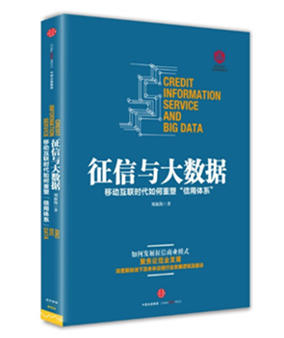
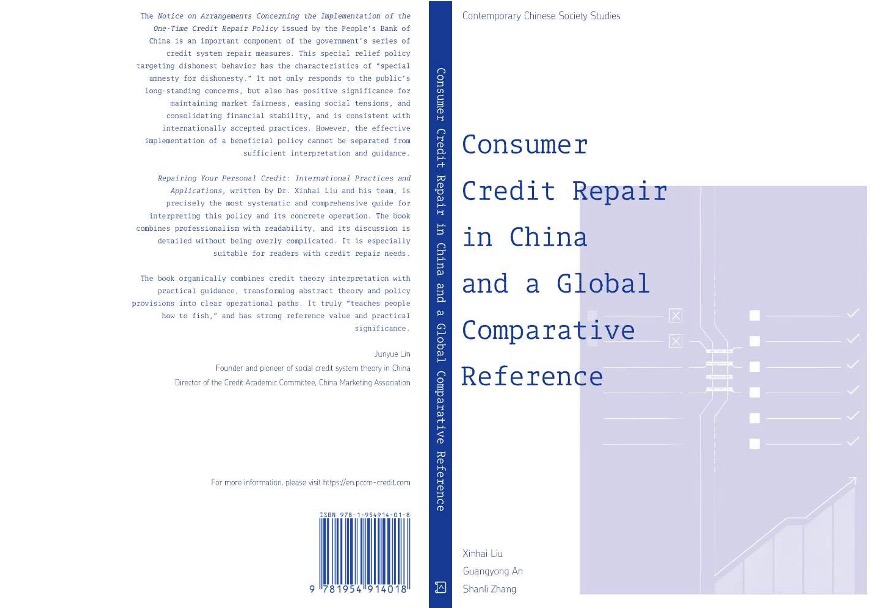
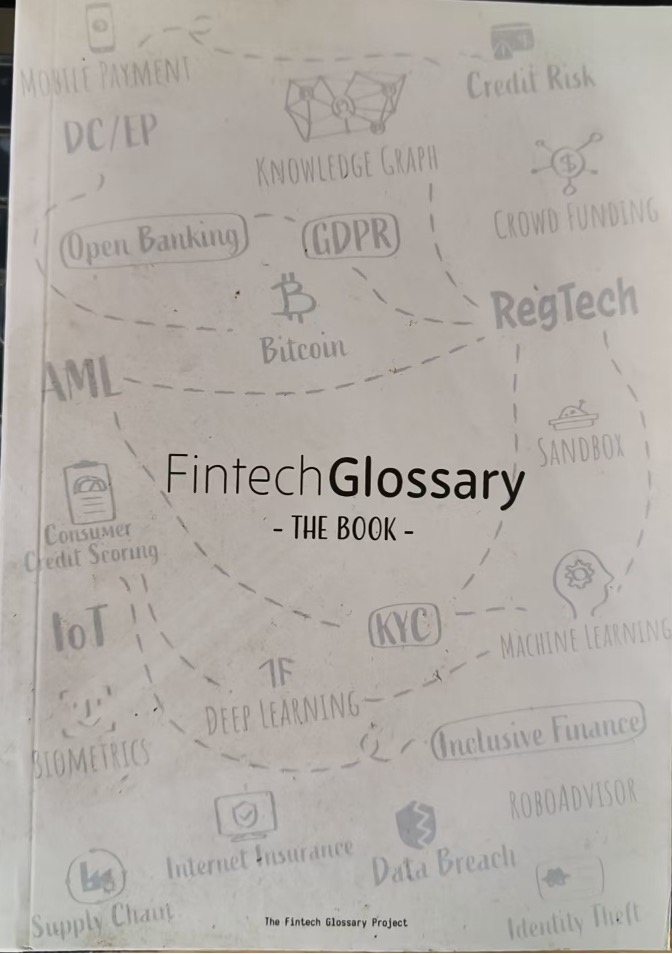
At the conclusion of the meeting, Dr. Liu presented the OECD expert with English-language books on credit repair and financial technology, reflecting some of his and his team’s recent research in these fields. The two sides also took commemorative photographs following the discussion.
The exchange provided a valuable opportunity to connect China’s rapidly evolving FinTech and credit technology practices with broader international economic and policy research. Both sides expressed interest in maintaining professional dialogue and exploring further exchanges on the future of artificial intelligence, digital finance, credit infrastructure and data governance.